
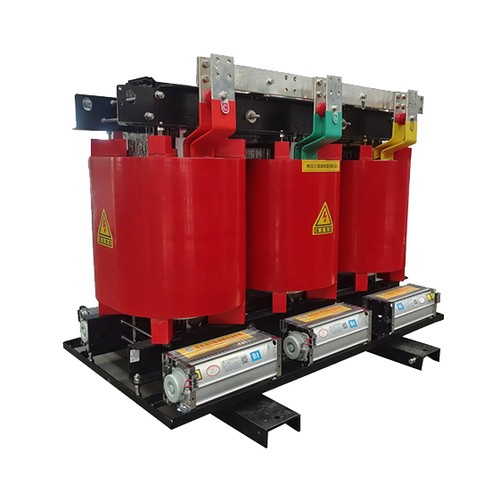
“Oil or dry type?” sounds like a product question, but it is usually a site-design question. Fire strategy, ventilation, floor area, environmental exposure, maintenance access and utility practice should be reviewed before comparing purchase prices.
Often strongest outdoors
Liquid cooling supports compact active parts and a broad range of ratings. Outdoor substations can accommodate radiators, oil containment and separation distances without making a building carry the thermal load.
- Plan bunding or containment.
- Confirm fluid type and fire strategy.
- Allow access to valves, radiators and sampling points.
Often easier inside buildings
No insulating liquid means no oil containment, but the heat still has to leave the room. Enclosure rating, airflow, dust, humidity, altitude and acoustic treatment directly affect usable capacity.
- Calculate room heat rejection.
- Keep enclosure air paths clear.
- Check environmental and fire-behaviour classes.
Use the building to make the decision
| Project condition | Question to resolve |
|---|---|
| Hospital, data centre or occupied building | What fire, smoke, noise and continuity requirements apply? |
| Coastal, dusty or humid location | Can the enclosure and ventilation maintain the required environment? |
| Outdoor utility distribution | Does local practice favour liquid-filled equipment, and is containment available? |
| Future load growth | Can ventilation, cables and switchgear support the proposed future rating? |
Dry type does not automatically mean “indoor and maintenance-free”; oil immersed does not automatically mean “unsafe.” Both depend on a complete installation design.
Compare the full installed system: transformer, enclosure, room or compound, ventilation, fire protection, civil works, losses and maintenance plan. That comparison is more useful than choosing a technology first and forcing the site to accept it later.