
500 kV Regar–Dushanbe Grid Reinforcement
500/220/35 kV autotransformer group · 3 × 267 MVA
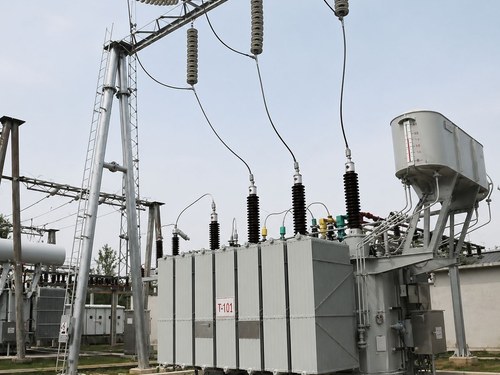
This transmission project is not simply a transformer replacement. It links the duty of the Regar 500 substation to a second 500 kV route between Regar and Dushanbe, where the network must continue carrying power when a major circuit is unavailable.
The network problem comes first
Public project documents describe a new approximately 50 km 500 kV line between Dushanbe and Regar. At Regar, autotransformer group 3 is to be replaced by three 267 MVA single-phase units. The same program adds a separate three-unit, 167 MVA group at Dushanbe. Together, the line and transformer works are intended to increase transfer capability and satisfy an N-1 operating requirement.
That context changes the design conversation. Nameplate MVA is only the starting point; the project team also needs the expected power-flow cases, permitted overload profile, system short-circuit level and the contingency that defines the guaranteed rating.
Two substations, two different duties
| Location | Published equipment scope | Primary design concern |
|---|---|---|
| Regar 500 | Replacement of group 3 with 3 × 267 MVA, 500/220/35 kV units | Fit with the operating yard, existing interfaces and outage sequence |
| Dushanbe 500 | New group 2 with 3 × 167 MVA, 500/220/35 kV units | New-bay coordination and integration with the second 500 kV circuit |
What belongs in the transformer specification
- Insulation coordination for all three voltage levels, including neutral arrangement and surge-arrester duties.
- Positive-, negative- and zero-sequence impedance data for network and protection studies.
- Cooling-stage ratings and auxiliary power that remain credible under the stated contingency.
- Bushing terminal loads, phase spacing and connection details matched to the substation layout.
- Transport dimensions and site assembly plans for single-phase units moving through a constrained inland route.
- Factory tests, site tests and protection interfaces agreed before manufacture is released.
The equipment schedule should be read together with the single-line diagram, contingency study and transport study. On a 500 kV project, none of those documents is secondary.